Thursday, December 22, 2011

See Saw Pump ~ children pump water


JOY PUMP ……See Saw Pump

Joy pump is an innovative concept of pumping water from a bore well, a sump or a rain water collector tank. It uses playful energy of the children or the operators collectively to pump water. The Joy pump can draw water from a well and further lift it to an over head tank above the ground level for storage and distribution. It does not require electric power. It is an eco-friendly, child friendly pump.

See Saw Pump
Joy Pump


Advantages
  1. Suitable for use on 100mm and above diameter bore well, sump or rainwater collector tank.
  2. Can lift water up to 8m above ground for storage and distribution.
  3. On line water purification devices can be used with either pumping or distribution system.
  4. Easy to install and safe to use.
  5. Low operation and maintenance cost.
  6. Can be adopted with below ground assembly of any deep well hand pump.
  7. Convenient for use in remote areas.

Technical Details

Construction Details Fabricated Mild steel
Wing span 3 m
Play mechanism Seesaw
Capacity 8-16 children
Ideal speed 40 strokes per minute
Out put 1500-2000 Liters per hour
Space requirement 6m x 1.5 m minimum
Operating depth Up to 80 m depth
Cylinder Direct action reciprocating cylinder Of any deep well hand pump
Deliver head 8 m
Weight 600 kgs.
Riser pipes As per user requirement

Applications
The Joy pump can be used for water supply in
  1. Schools, for drinking, sanitation and personal hygiene
  2. Institutions for drinking and sanitation
  3. Public garden, drinking, sanitation and watering plants
  4. Community centers for drinking and sanitation
  5. Small communities for drinking
  6. Relief camps for drinking.


- : Our Product Range : -
Joy Pump (See Saw Pump) Joy Pump (Merry- Go-round Pump) Force Lift Hand Pump & Hand Cum Power Pump
Hand Washing Facility India Mark Deep Well Hand Pump Hand Pumps
Treadle Pumps Pressure Treadle Pumps Solar Powered Water Pump


Tuesday, December 20, 2011

How to build a Massachusetts garage out of tires


Uploaded by on Dec 20, 2011
Method for using earth-packed tires to build a 2-car garage.

By Elizabeth Rose for www.treadbare.blogspot.com/2011/12/whoah/html (blog link doesn't seem to work anymore, but this is written on the video). Great video. Looks real easy and so "conservative." Fits right into the neighborhood! Who would have guessed it was tires?

Monday, December 19, 2011

Friends of Gaviotas: Energy: not created, not destroyed


January 3, 2009

By natural law, energy is neither created nor destroyed – it simply transforms from one medium into another. No matter where you are, it is always there for the taking. One might even say that it is so close, that most people are unable to see it! One should always use all the locally available energy first – tap all locally available resources first – before even thinking of bringing in energy from somewhere else. In that spirit, here is what Gaviotas has done recently:

For years, Gaviotas has been generating its electricity by means of a steam turbine running on wood culled from its forest. This year, the villagers have developed a novel fuel mix made of turpentine (distilled resin tapped from the pine trees in the forest) and plant oil (extracted from the fruit of the palm trees in the forest or from recycled cooking oil) that now runs all their diesel engines – electric generators, tractors, and soon trucks as well. All that was needed were stainless steel filters (developed in-house) to replace the regular paper oil filters in their engines. This new fuel mix doesn’t require any changes to the engines’ diesel fuel injection pumps.

Gaviotas features a community dining hall that is very popular with the villagers. Its kitchen makes about 200 meals a day. The massive cooking stoves have now been equipped with internal piping through which water is heated to near boiling and is then circulated without a pump, simply via natural convection (thermosiphon). This new heat exchange system replaces the 30 solar collectors that used to sit on the roof of the dining hall. The old collectors (also thermosiphon with no moving parts) are still in top shape, so they will simply get a new paint job and be sold for $1,000 a piece!
Biodiversity in the Gaviotas forest continues to increase. The villagers have planted a mix of pine and palm, and now fruit trees, and nature is adding the rest: hundreds of native plant and animal species are emerging that had not been seen on these arid plains in ages.

http://www.friendsofgaviotas.org/Updates/Entries/2009/1/3_Travels_Through_The_East.html 


Watch this excellent 25 minute film about Paolo Lugari at:
http://web.mac.com/giocondaperezsnyder/Site/Paolo_Lugari.html

Gaviotas ~ Sustainable Living Community


Date: Sat, 17 Dec 2011
From: robert.schorlemmer@usa.net
To: gaviotas@sustainablesources.com
Subject: [Gaviotas] Gaviotas - Invitation to Visit in March 2012
Message-ID: <241PLqJwV7984S03.1324113801@web03.cms.usa.net

Hi all,

We are organizing a trip to Gaviotas (20 people or so) for March 2012, at the invitation of the villagers and Paolo Lugari. You'll find more info about this at: www.friendsofgaviotas.org (there is a discount for signing up in December). Please spread the word, so we can fill the plane that will take us there :-)

Best,

Robert

---

From: http://www.friendsofgaviotas.org/Friends_of_Gaviotas/Home.html

Gaviotas is a village of about 200 people in Colombia, South America. For three decades, Gaviotans - peasants, scientists, artists, and former street kids - have struggled to build an oasis of imagination and sustainability in the remote, barren savannas of eastern Colombia, an area ravaged by political terror. They have planted millions of trees, thus regenerating an indigenous rainforest. They farm organically and use wind and solar power. Every family enjoys free housing, community meals, and schooling. There are no weapons, no police, no jail. There is no mayor.

The United Nations named the village a model of sustainable development.

Gabriel Garcia Marquez has called founder Paolo Lugari the "inventor of the world." ...more

LEED Tutorial Sample


Uploaded by on Oct 17, 2009
GREEN-illustrated.com provides illustrated video tutorials to better explain the concepts of the LEED® Credits & Prerequisites

Category:

Tags:

Sunday, December 18, 2011

The Art of Making Biomass Briquettes


Uploaded by on Mar 25, 2009
Energy Links - Biomass Briquettes: Theres an art to making biomass briquettes, the low-cost environmentally friendly, cooking-fuel alternative to traditional charcoal and firewood. Here a Ugandan community member uses a mold and Mini-Bryant press to shape and drain the briquettes, one of the final steps of the process. Learn more about making briquettes at http://www.accion.org/Page.aspx?pid=1554.

This video was taken during an Energy Links pilot project in Uganda in March 2009. The Center for Financial Inclusion's (www.centerforfinancialinclusion.org) Energy Links project a new pilot program in Uganda aims to bring renewable energy to microfinance clients, contribute to reducing greenhouse-gas emissions and give MFIs a viable business-in-a-box.

Category:

Tags:

----

More: LegacyFound.org

Legacy Foundation provides training, technology and media services for biomass fuel briquette production, environmental conservation and income generation throughout the world.

The Mission of the Legacy Foundation is to promote sustainable human development and preserve our environment through the integration of technology innovation, media, and management. The Legacy Foundation has ongoing partnerships with individuals, groups and institutions in over 30 nations world wide.

See many hard copy or downloadable Technical & Training Manuals:
Briquette Making: A Users Manual (Hard Copy) 
Briquette Making: A Users Manul $35 

SPECIAL: Full set of four manuals (CD)
Fuel Briquette Press Kit: A Construction Manual, Briquette Making: A Users Manual, Fuel Briquettes: A Trainer's Manual, and Fuel Briquettes: The Theory and Applications From Around the World.

TMC-1™ Operations Manual
The TMC frees up that labor to effectively increase production output by up to 50% while greatly reducing the drudgery of the overall effort.

Individual price: $35.00

YouTube Video on how to make briquettes: http://www.youtube.com/watch?feature=player_embedded&v=EOFbQ-_u0qA


ECO Fuels, Biomass fuel briquette production, environmental conservation & income generation for sustainable development.

Saturday, December 17, 2011

How to make Charcoal Briquettes from Agricultural Residues

Business and ideas

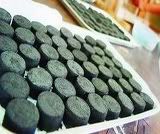
briquettes How to Make Charcoal Briquettes from Agricultural ResiduesThe process of making charcoal briquettes from agricultural waste is not new. Many institutions have experimented on different agricultural residues to find out which raw materials are possible for charcoal making. They encourage the use of dry organic material (also called biomass) that is unsuitable for animal or human consumption, or for composting such as sugar cane bagasse, palm leaves or bamboo, coconut shells and husks, straw and reeds, corn cobs and other farm crop wastes.

Agricultural residues from harvested crops, using biomass charcoal briquetting techniques, can be converted from piles of waste into useful and enviro-friendly briquettes. It can be sold to generate additional income for the family.

How to Make Charcoal Briquettes? Below is the process from India Development Gateway – Biomass Charcoal Briquetting. Use this method on how to make charcoal briquettes, and produce your own homemade ones.

Read more: http://www.pinoybisnes.com/business-ideas/how-to-make-charcoal-briquettes-from-agricultural-residues/#ixzz1gqbBQW4v

and http://www.indg.in/rural-energy/technologies-under-rural-energy/energy-efficiency/biomass-charcoal-briquetting/

Biomass Charcoal Briquetting

Rural Energy
Agriculture  |  Health  |  Primary Education | Social Welfare  |  e-Governance  

Biomass Charcoal Briquetting

The agricultural residues are produced abundantly after harvest of each crop in our villages. Most of these residues are burnt in the open field. However using Biomass Charcoal Briquetting technologies, these residues, can be used for generating an alternative fuel which is cost effective and environmentally friendly. It can also add income to the family.
What is briquetting
Briquetting is the process of converting low bulk density biomass into high density and energy concentrated fuel briquettes
Methodology
There are two different methods of charcoal making.
1. Direct method The direct method is to heat and form an incomplete combustion of the organic matter that results in the formation of charcoal.
2. Indirect method In the indirect method an external heat source is used to "burn" organic matter kept in a closed but vented airless chamber. The indirect method results in production of high quality charcoal with less smoke and pollutants

MCRC’s method of charcoal briquetting
Requirements:
 
   1. Locally available biomass (eg casuarina leaf litter, sugarcane trash, rice husk, coir pith, groundnut shells, etc)
2. Carbonizing chamber (furnace )
3. Binder (starch or cassava flour)
4. Mini Briquetting machine (10kg/hr)
Stepwise process of charcoal making:
1. Collection of biomass
Collect the locally available biomass, sort them, chop the large-size raw materials into smaller pieces and dry at sunlight.
2. Carbonization
i. Designing the Furnace

• Outer drum : A 200lits. metal oil drum with the top cut out and a 12" width x 10" height hole cut in the lower side
• Two iron rids (8”) has to be fixed at the bottom of the metal drum running parallel from one side to the other side. This iron rods act as base to support the stainless steel inner drum.
• Inner drum : A 100lits stainless steel drum with proper lids and six (3/8") holes at the bottom.
• The inner drum is placed into the larger drum.


ii. Carbonizing the biomass
• The biomass is tightly packed into the inner drum and fired for 45minutes to 1hr (Depending upon the biomass) using biomass.
• After firing, the carbonized biomass in the inner drum has to collected and weighed. In this method 30 % of carbonized char can be obtained.

3. Preparation of binder
The binder material is used for strengthening the briquettes For every 100 kg of total weight of carbonized charcoal powder, prepare a binder mixture by adding 5 to 6 kg of starch or cassava flour to 60 - 100 litres of water (based on the weight of the raw materials)
4. Mixing
Mix such that every particle of carbonised charcoal material is coated with binder. It will enhance charcoal adhesion and produce identical briquettes.
5. Briquetting. The charcoal mixture is made into briquettes either manually or using machines. Pour the mixture directly into the briquetting mould / machine to form uniform-sized briquettes.
6. Drying and Packaging
Collect the briquettes in a tray, dry them under the sunlight, pack them in plastic bags and seal
General Characteristics of briquettes
Moisture : 7.1%-7.8%
Volatile Matter : 13.0%-13.5%
Fixed Carbon : 81.0%-83.0%
Ash : 3.7%-7.7%
Sulfur : 0.0%
Heating Value : 7,100-7,300 kcal/kg
Density : 970kg/m3
Advantages of the technology:

1. Smokeless: The charcoal briquettes burn without any smoke during ignition and burning.
2. Low Ash content: Minimum residual ash is formed (less than 5% of the original weight of the charcoal).
3. Higher Fixed Carbon & calorific value: Normally the concentration of fixed carbon will be about 82%. The calorific value of charcoal briquettes is 7500 Kcal/KG.
4. Odourless: The biomass charcoal briquette contains minimum evaporative substances, thus eliminating the possibility of odour. 5. Longer burning hours: Two times longer burning hours compared to hardwood charcoal.
6. Sparkless: These charcoal briquettes will not produce sparks as compared to hardwood charcoal.
7. Less crack & better strength: Less crack & better strength make the charcoal burn for a long time.
Links and more:

 http://www.indg.in/rural-energy/technologies-under-rural-energy/energy-efficiency/biomass-charcoal-briquetting/

For further details please contact

Director
Shri AMM Murugappa Chettiar Research Centre (MCRC)
Taramani
Chennai 600 113
Tamilnadu, India.

Phone: 044-22430937
Fax 044-22434268
E.Mail : energy@mcrc.murugappa.org
amm-mcrc.org


More: http://www.indg.in/rural-energy/technologies-under-rural-energy/energy-efficiency/biomass-charcoal-briquetting/

Also see a very impressive list of ongoing and completed projects from 1971 to current:


http://amm-mcrc.org/Programmes/Projects.html


13-Year-Old Makes Solar Power Breakthrough by Harnessing the Fibonacci Sequence


tree inspired solar, boy solar invention, Aidan Dwyer, solar array, new solar array, solar tree, solar technology, biomimicry solar,
While most 13-year-olds spend their free time playing video games or cruising Facebook, one 7th grader was trekking through the woods uncovering a mystery of science. After studying how trees branch in a very specific way, Aidan Dwyer created a solar cell tree that produces 20-50% more power than a uniform array of photovoltaic panels. His impressive results show that using a specific formula for distributing solar cells can drastically improve energy generation. The study earned Aidan a provisional U.S patent – it’s a rare find in the field of technology and a fantastic example of how biomimicry can drastically improve design.
tree inspired solar, boy solar invention, Aidan Dwyer, solar array, new solar array, solar tree, solar technology, biomimicry solar, sustainable design, fibonacci sequence, solar treePhoto by Cristian Bortes
Aidan Dwyer took a hike through the trees last winter and took notice of patterns in the mangle of branches. His studies into how they branch in very specific ways lead him to a central guiding formula, the Fibonacci sequence. Take a number, add it to the number before it in a sequence like 1+1=2 then 2+1=3 then 3+2=5, 8, 13, 21 and so on a very specific pattern emerges. Turns out the pattern and its corresponding ratios are reflected in nature all the time, and Aidan’s keen observation of how trees branch according to the formula lead him to test the theory. First he measured tree branches by how often they branch and at what degree from each other.

The spiral on trees showing the Fibonacci Sequence

Aidan studied leaf arrangements

Aidan measuring the spiral pattern
More & how he did it: http://www.amnh.org/nationalcenter/youngnaturalistawards/2011/aidan.html

Japanese Sit Tub & Magnesium

The world is made by artists... 
(See "before and after" photos below).
In the absence of hot springs or hot volcanic water,
the Japanese "have it going on!"

Twenty minutes in a warm Epsom Salts bath
and "all the pain goes away."
No pills required. Magnesium is Magic.


Stylish Japanese Sit Bath Tub by Victoria and Albert Photo Gallery
Stylish Japanese Sit Bath Tub 2Stylish Japanese Sit Bath Tub 3Stylish-Japanese-Sit-Bath-Tub


Japanese Sit Tub


Wow! Some of these are really nice, and I think they can be hand-painted with acrylic paints.
I am going to make some for sale here in Panajachel,
as bathtubs in Guatemala are few and far between, and expensive.
We could do the solar hot water heater with the 55 gal. drum -
same thing as a rain barrel, almost, or maybe use this actual TUB as the water container.
Put a lid on it and keep it outside, with an arbor with flowering vines above and around.
We could sell the whole thing, kit-and-kaboodle.
I might be able to do this on the roof of my new workspace (former restaurant).

http://www.kubodo.com/2011/01/14/stylish-japanese-sit-bath-tub-by-victoria-and-albert/stylish-japanese-sit-bath-tub-2/

image.jpeg

A modern sit tub based on the traditional Japanese ofuro that offers a refreshingly different experience - side by side shared bathing.
Available at: DesignerPlumbing.com
* * * * *

Japanese ofuros

Japanese ofuro's. In Japan, no daily ritual is more uniquely important to the individual's well being than the bath at the end of the day. The ofuro has been used ...


Read more with this excellent article from Roberts Hot Tubs: http://www.rhtubs.com/ofuro.htm
* * * * *


Image Search for: build a small japanese bath
Outdoors with beautiful garden houses, trellis, flowers and more,
along with the solar hot water system - no panels, just black plastic pipe and a 55 gal drum.
This will be a great, inexpensive project for 2012!

build a small japanese bath. images.png
1355K

Friday, December 16, 2011

Timber Framed Arches and Corbels


We are different. Because we focus on the frame. 

Vermont Timber Works
36 Fairbanks Road
N. Springfield, VT 05150
(802) 886-1917
(802) 886-6188 Fax

vermonttimberworks.com 

How to Light Up Your House for $65 with DIY Solar Energy


Uploaded by on Jul 29, 2010
Watch this video!

http://tronjon.com provides power generation equipment for home, recreational, and industrial use. Find power generators of every size and wattage, no matter how large or small your power needs are. Select from many of the reknown brands such as Coleman, Yamaha, Generac, and more. Our power generator catalog includes portable generators, silent generators, gas compressor generators, power take off generators, belt driven generator heads and more.

Category:

Tags:

Solar Powered Kart Made in the Philippines


Uploaded by on Mar 6, 2011
The Solar Powered Go Kart is Made by Solar Power Expert from FFG Solar Power Trading based in San Lorenzo South, Sta. Rosa City, Laguna , Philippines. Powered by 190 watts Mono Crystalline Solar Panel, 200watts DC Brushless Motor, 50AH/24V Battery and Digital Controller. Eco friendly and no emission.

Category:

Tags:

Thursday, December 15, 2011

Grow & Cook Tilapia / Talapia Fish

  1.  Tilapia - Wikipedia, the free encyclopedia

    en.wikipedia.org/wiki/Tilapia - Traducir esta página
    This article is about the fish that fall under the term tilapia in common usage. ... Historically, they have been of major importance in artisan fishing in Africa and ...
  2. Talapia Fish Recipe | Group Recipes

    www.grouprecipes.com/talapia-fish - Traducir esta página
    Our most trusted Talapia Fish recipes. Reviewed by millions of home cooks.
  3. Tilapia - Definition - Tilapia Fish is an African Fish that can now be ...

    bbq.about.com/cs/fish/g/blgt0001.htm - Traducir esta página
    This fish is low in fat and perfect for grilling. ... Definition: This small, low fat fish originally comes from Africa where it has been ... Common Misspellings: Talapia ...

1 MILLION Pounds Organic Food On 3 Acres

How 1 MILLION Pounds Of Organic Food Can Be Produced On 3 Acres.
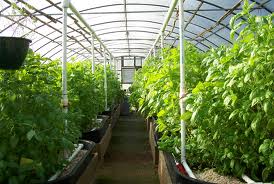
 
UPDATE 26th July 2011 -The response we have received from this short story is amazing, but created many questions from subscribers who needed further information. We have since looked into this and are happy to share with you detailed information on this amazing organisation called Growing Power. It would appear that there are many subscribers of Wake Up World who have been tasked with a similar project in their local community (though perhaps not on this scale) and we trust that the new article will be of use to those who required further details.
Click here for a detailed explanation of how the below is done, though we suggest watching the below movie first as it is not included in the new article.
Want to jump straight in with step by step instructions on how to set this up in your very own home? It is cheap and easy to create. Details here
Original Story
I came across this video of a man who has figured out a system to grow 1 million pounds of food on 3 acres each and every year. How are they doing this?
* By producing 10,000 fish
* Using 300 to 500 yards of worm compost
* By utilizing vertical space
* Having 3 acres of land in green houses
* Using 1 simple aquaponic pump
* Food is grown all year by using heat from the compost piles
A packed greenhouse produces a crop value of $5 Square Foot! ($200,000/acre).
Can you imagine if places like this started popping up all over the world? It would be one giant step towards self-reliance. Food self-sufficiency is a major step towards being sovereign. If you are not able to start your own garden, consider finding a community garden or hooking up with a small local farm.

The video shows “The Urban Farmer” (Will Allen from Growing Power) who’s taken Aquaponics to the extreme, both videos are taken on Will’s farm.

http://youtu.be/jV9CCxdkOng  or  http://vimeo.com/15997939


Create What You Have Seen In The Movie At Your Own Home

PART 2 – How 1 MILLION Pounds Of Organic Food Can Be Produced On 3 Acres

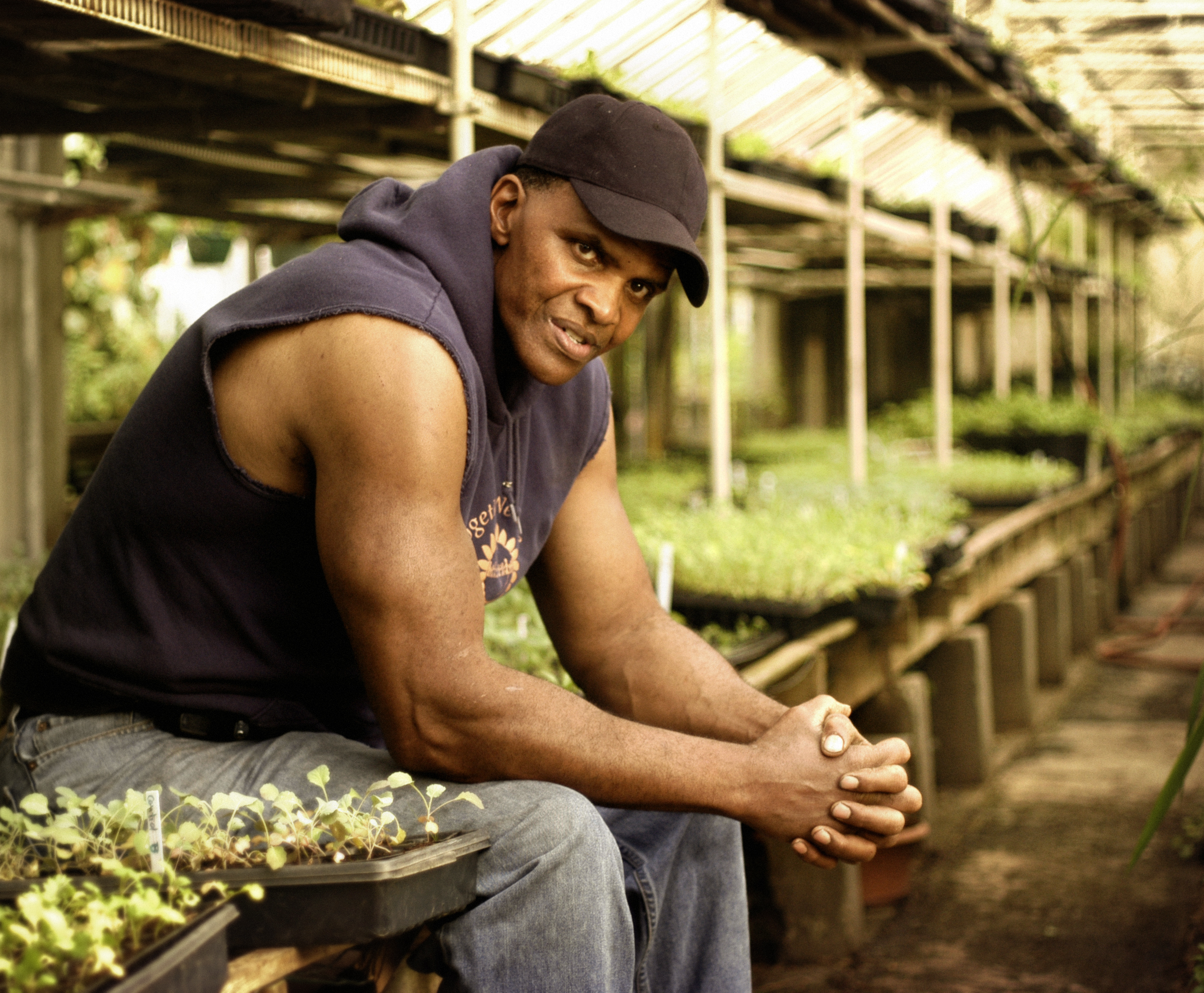
Will Allen in Greenhouse Courtsey of Growing Power

The response we received from our original story (How 1 MILLION Pounds of Organic Food Can Be Produced on 3 Acres) was outstanding, but at the same time created many questions from subscribers who needed further information. If you have not seen the original story, please click here. We have since looked into this further and we are happy to share with you all information on this amazing organisation. It would appear that there are many subscribers of Wake Up World who have been tasked with a similar project in their local community (though perhaps not on this scale) and we trust that the following information will be of use to those who required further details. We would love to hear from anyone who is putting this into practice.

The co-founder of this initiative is called Will Allen and he helped create the company “Growing Power." Growing Power began with a farmer, a plot of land, and a core group of dedicated young people.  Today, their love of the land and their dedication to sharing knowledge is changing lives.

Will Allen, Chief Executive Officer believes, “If people can grow safe, healthy, affordable food, if they have access to land and clean water, this is transformative on every level in a community.  I believe we cannot have healthy communities without a healthy food system.”


NOTE: I can't wait to try this here at Lake Atitlan, Guatemala. We grew oysters years ago via Aquaculture in Pescadero, CA, and I can't wait to try fish and vegetables here now. Plus we can help all the people around the lake in the many villages that do not have access to healthy, organic or sufficient food. What a wonderful benefit for all concerned! God bless people like this who do such good works for the world.

I am going to try and get a pdf transcript of this video made so we can use it with people that don't have access to computers or internet. I believe they are using "Talapia" fish.  I found a lot of info about growing fish in 55 gal barrels, and lots more about Tilapia fish.


How to Grow Fish in 55-Gallon Drums: 
http://www.ehow.com/how_5845276_grow-fish-55_gallon-drums.html


Talapia Fish - YouTube (Tilapia)

www.youtube.com/watch?v=e5tNYKJyEUQ19
 
Tilapiines are also among the easiest and most profitable fish to farm. This is due to their omnivorous diet ...

"The winds of grace blow all the time; all we need do is set our sails."